Buy your weekday smoothies and get your weekend ones for free. (7 for the price of 5!)
WELLNESSWEEK
Aphrodisiacs are often misunderstood, but scent is not. Smell connects directly to the brain systems involved in emotion, memory, and physiological response, which is why certain aromas can shift mood and presence so quickly. This guide looks at Ylang Ylang and Patchouli through that lens, focusing on how they may support relaxation, openness, and a more grounded state that naturally supports connection, all through the way scent influences the nervous system.

The word aphrodisiac gets used carelessly. It gets applied to oysters, dark chocolate, red wine, and a dozen other things whose relationship to desire is, at best, anecdotal. Essential oils are different. The mechanism by which certain botanical compounds affect attraction, emotional openness, and arousal is not mythical or rooted in folklore — it is neurological, it is measurable, and it has been documented in peer-reviewed research. This is how it works.
The Olfactory-Limbic Pathway: Why Scent Hits Different
When you inhale a scent, aromatic molecules bind to olfactory receptors in the nasal cavity and transmit signals directly to the limbic system — the part of the brain responsible for emotion, memory, sexual response, and autonomic regulation. What makes the olfactory pathway unique is this: it is the only sense that bypasses the thalamus entirely. Every other sense — sight, touch, sound, taste — gets routed through the thalamic relay before reaching the emotional centres. Smell does not wait. It arrives in the limbic system within milliseconds, influencing mood and physiological state before the conscious mind has even processed what it is smelling.
This is why a certain scent can stop you mid-breath, or why a specific perfume carries an entire memory inside it. It is not metaphor. It is anatomy. And it is exactly why aromachology — the science of scent’s effect on mood and behaviour — treats certain essential oils as genuinely capable of shifting the neurological conditions under which desire moves.
Ylang Ylang: The Most Studied Aphrodisiac Oil in the World
Ylang Ylang (Cananga odorata) is steam-distilled from the flowers of the cananga tree, native to the tropical rainforests of Southeast Asia. It has been used in bridal rituals and love ceremonies across the Philippines, Indonesia, and Madagascar for centuries, and is a primary note in Chanel No. 5 — a fact that speaks to its standing in the world of fragrance. But its relevance here is pharmacological, not cultural.
Published research in Phytotherapy Research examined the physiological and psychological effects of ylang ylang oil on human subjects following transdermal absorption. Findings included measurable decreases in blood pressure, increases in skin temperature, and significant reductions in anxiety alongside increases in self-reported calmness and alertness. These are not poetic descriptions. They are physiological markers of the neurological state most associated with openness, connection, and desire.
The compounds responsible — primarily benzyl acetate, linalool, and geraniol — activate both the parasympathetic nervous system (reducing fight-or-flight response) and the limbic reward pathway (elevating mood and sensory sensitivity). The result is not sedation. It is presence. It is the scent of being able to slow down.
→ Shop Ylang Ylang Essential Oil
Patchouli: The Grounding Note That Holds the Blend Together
If Ylang Ylang lifts, Patchouli roots. Patchouli (Pogostemon cablin) is steam-distilled from the dried leaves of the patchouli plant and carries one of the most distinctive aromatics in the essential oil world — earthy, warm, woody, and slightly sweet. It is a base note oil, meaning it evaporates slowly and anchors a blend in place for hours after application.
In the context of aphrodisiac aromachology, Patchouli performs a specific structural role: it prevents Ylang Ylang’s intense florality from becoming overwhelming, creating a scent profile that reads as magnetic and sensual rather than sweet. Independently, Patchouli’s primary active compound — patchoulol — has been studied for its mood-elevating and stress-reducing effects, and its deep, resinous base note means it lingers on the skin long after application. A blend without it can feel unanchored. With it, the composition has depth, intention, and staying power.
→ Shop Patchouli Essential Oil
The Carrier That Changes Everything: Sweet Almond Oil
The carrier oil in an aphrodisiac blend is not an afterthought. It is the medium through which the essential oils are delivered — to the skin, through the skin, and into the air around you. Sweet Almond Base Oil is the carrier of choice in the Vellum Aphrodisiac Kit for three specific reasons.
First: its high oleic acid content makes it the most skin-compatible oil for full-body application — it spreads easily, glides for extended periods, and absorbs slowly enough to support massage without disappearing too quickly. Second: its faintly warm, neutral scent adds nothing that competes with the Ylang Ylang and Patchouli it carries — it is a canvas, not a colour. Third: it leaves the skin warm, soft, and faintly luminous after application. In this context, that is not an irrelevant quality.
How to Build the Ritual
The most common mistake with aphrodisiac oils is applying them and expecting immediate effect. These are not switches. They are conditions. They work by shifting the nervous system state of the room — and everyone in it — over 20 to 30 minutes of olfactory exposure. The ritual matters as much as the blend.
Start with the diffuser. Add 3 drops each of Ylang Ylang and Patchouli and let it run for 30 minutes before any physical application. Let the scent settle into the room. Let the nervous system begin to shift before anything else does.
For the body blend: add 3 drops each of Ylang Ylang and Patchouli to 4–5 pumps of Almond in your palm. Warm between your hands for 10 seconds — the warmth activates and amplifies the aromatic compounds. Apply to shoulders, neck, chest, and lower back. Breathe deliberately as you apply. Inhale the blend. This is not a skincare step — it is olfactory delivery.
A warm room amplifies everything. Heat opens pores and accelerates the evaporation of aromatic molecules, increasing the olfactory concentration in the air. This is not incidental. Warmth is part of the formula.
The Complete Kit
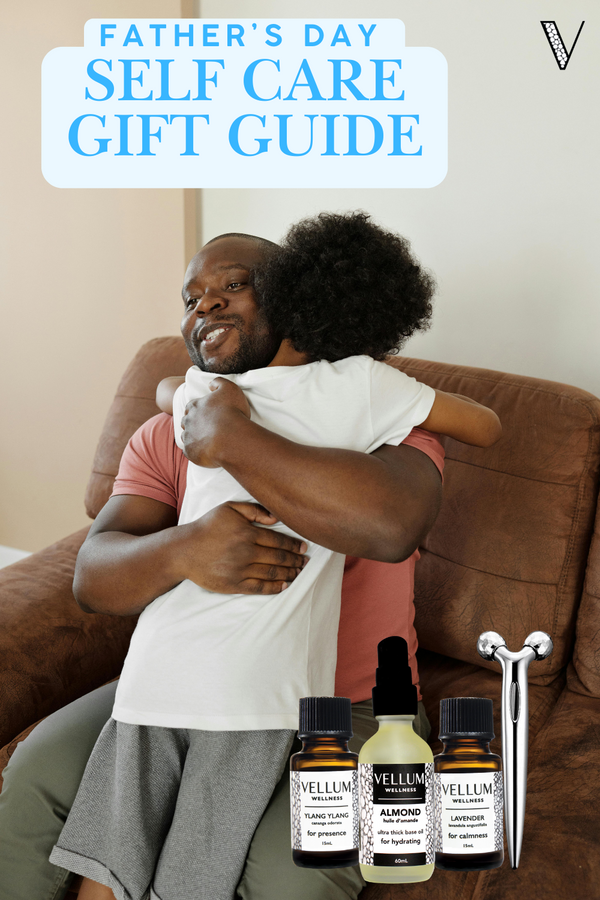
The Vellum Aphrodisiac Kit contains Almond Base Oil (60ml), Patchouli Essential Oil (15ml), and Ylang Ylang Essential Oil (15ml) — everything needed to build the ritual described here. It is formulated for all genders and skin types. The aromachology effects of Ylang Ylang and Patchouli are not gender-specific. The nervous system pathways they work through are universal.
Aphrodisiac oils are not about magic. They are about creating the neurological conditions — reduced anxiety, elevated mood, heightened sensory presence — under which desire can move freely. Ylang Ylang and Patchouli do the neurological work. The ritual is yours to build around them.
Explore the full Vellum Wellness collection at vellumwellness.com.